


Healing Within Reach
“Health is a human right. We have a responsibility to help do what we can to make sure that this basic human right is realized by everyone.”
Jessica Currier, Ph.D.
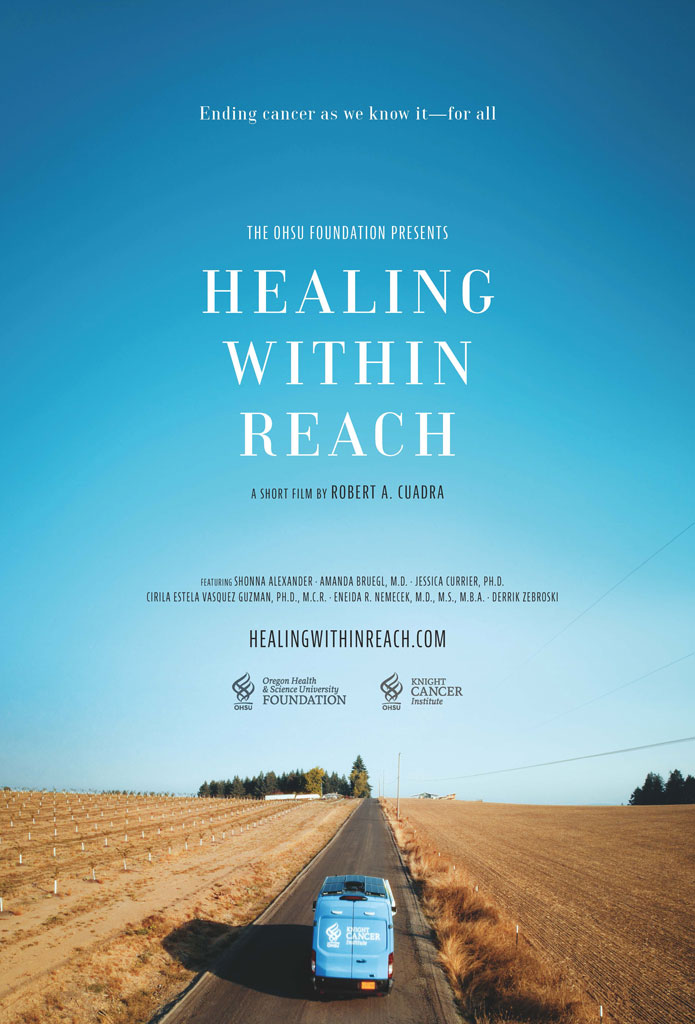
Release Date:
February 1, 2024
Featuring (in order of appearance):
Amanda Bruegl, M.D. (Oneida/Stockbridge-Munsee)
Shonna Oliver
Mike Oliver
Eneida R. Nemecek, M.D., M.S., M.B.A.
Derrik Zebroski
Jessica Currier, Ph.D.
Cirila Estela Vasquez Guzman, Ph.D., M.C.R.
Crew:
Director / Filmmaker — Robert A. Cuadra
Director of Photography — Sean Conley
Producers — Heather McLendon, David Sims
Production Assistants — Andrew Bishop, Trina Sound
Synopsis:
The OHSU Knight Cancer Institute is committed to ending cancer as we know it. Key to that mission is ensuring that all the advancements made in the clinic and research labs reach everyone. How do we increase access to cancer screenings and other early detection efforts? How can we best listen to and engage underserved populations on what they need most — and what barriers they face? Healing Within Reach is a documentary-style short film that focuses on the life-saving importance of equity and access in cancer prevention and care.


Support OHSU Knight Cancer Institute
Your support makes all the difference in the lives of patients and their families. Join us in creating a world free from the burden of cancer.

